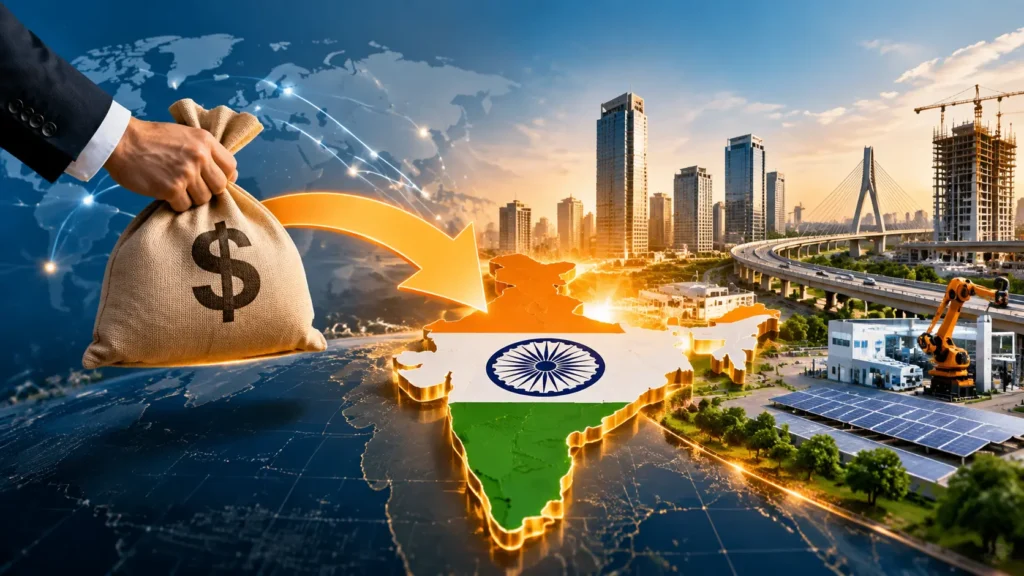

Countries aren’t politely asking multinational corporations to set up shop anymore. They are opening the treasury and practically bribing them.
It forces a serious conversation about national priorities and why do governments offer big incentives to attract more FDI when local budgets are already stretched to the breaking point.
The answer is pure survival. You either pay out the nose to get foreign capital and cutting-edge tech onto your soil, or your economy gets left behind in the geopolitical dirt.
How Governments Offer Big Incentives to Buy Global Relevance
The era of free-market purity is entirely gone. After years of brutal supply shocks and shifting trade wars, subsidizing foreign companies to build critical infrastructure locally is just how the modern game is played.
Nations are literally paying for national security, focusing heavily on semiconductor manufacturing, AI data centers, and advanced defense technology.
When a government drops billions to subsidize a single microchip plant, they aren’t looking at immediate tax returns. They are buying global relevance so they never have to rely on hostile rivals when the next supply disruption hits.
Tax Handouts and Subsidies Attract More FDI Than Polite Handshakes
India is currently running a hyper-aggressive Production-Linked Incentive scheme that recently helped push their cumulative FDI past the massive $840 billion mark.
Across fourteen strategic sectors, these direct production subsidies have locked in domestic manufacturing and created aggressive export ecosystems.
Meanwhile, the US and European Union are matching this energy with sweeping tax write-offs designed to steal corporate headquarters from one another.
It is genuinely ironic to watch governments hand billion-dollar corporations massive tax breaks just to get them to pour concrete in their jurisdictions.
Yet, financial analysts argue it remains worth the steep cost, pointing to local job creation and technological spillover that supposedly outweighs the upfront cash burn.
Green Energy Drives the Desperate Push to Attract More FDI
Looming climate deadlines are creating panic across Global markets. Almost every nation is scrambling to hit Renewable targets by 2030, and Governments fully realize they lack the domestic capital to do it alone.
Foreign direct investment serves as the absolute lifeblood for massive solar infrastructure, green hydrogen production, and new EV battery plants right now.
India’s recent milestone of hitting fifty percent non-fossil fuel capacity early was built squarely on the back of billions in foreign green energy investments.
Politicians are heavily subsidizing this energy transition because they have no other choice. To stay industrially competitive without choking on carbon penalties, they must pay foreign funds to build the grid.
The Real Cost When Governments Offer Big Incentives
The obvious downside to all this aggressive state intervention is figuring out what happens when the subsidies inevitably dry up.
Multinational corporations are entirely profit-driven entities with zero real loyalty to their host nations.
Will they actually stay, or do they immediately pack up for the next developing country offering a superior tax break?
The moment a rival nation flashes a bigger checkbook, rapid capital flight becomes a massive threat.
We are no longer watching a free market at work. We are witnessing a high-stakes, state-funded auction for global capital, and only the absolute highest bidders are walking away with the prize.