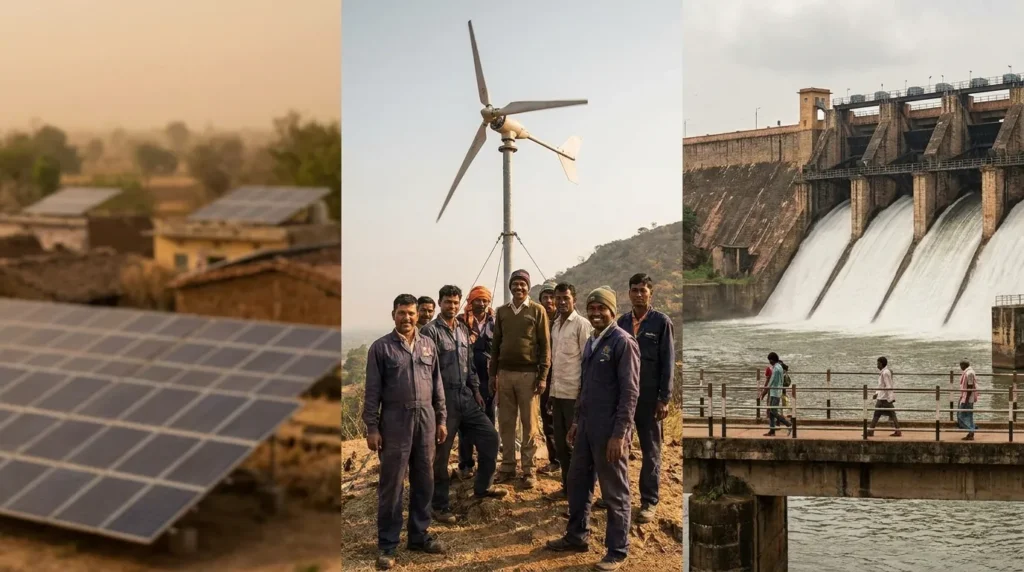

Right now in the searing heat of Rajasthan, there is a graveyard of perfectly good glass and steel. Thousands of Solar panels sit under layers of dust, wired up to high-capacity transmission corridors that are operating at a fraction of their design limit.
They are completely useless. The hardware works fine. The grid is right there. But the electricity has nowhere to go because a bureaucrat hasn’t signed a piece of paper.
This isn’t a mechanical glitch but a rough financial reality and it perfectly exposes exactly why an Indian renewable project will ultimately fail without a strong, legally binding PPA in place. When a booming clean energy market hits an administrative brick wall, the fallout is swift and devastating.
Why A Missing PPA Guarantees Financial Failure
Lenders do not fund press releases. They fund legally binding contracts. For developers in India, securing a Letter of Award feels like a massive victory, but it actually means nothing until the ink dries.
Without a solid PPA, banks instantly freeze project finance. You simply cannot fund large-scale Renewable Projects on the vague promise that someone might buy the electricity next year. Because if they don’t, the interest rates alone will drown the business.
Without that contract, a green energy bid transforms from a lucrative asset into an insolvent liability overnight. It is a mathematical death spiral.
Stranded Renewable Projects and Ghost Grids
The visible fallout of this bureaucratic waiting game is blindsiding. Based on recent 2026 data from the Ministry of New and Renewable Energy.. there are 45 gigawatts of stranded green capacity waiting for signatures.
Developers secured their land, built their substations, and got transmission connectivity, only to be left hanging. Billions of dollars in physical infrastructure are just baking in the sun across India.
In places like Andhra Pradesh, the developers of these Renewable Projects are paying massive debt service costs while generating absolutely zero revenue. And why? Because the PPA remains unsigned. The grid is hot, but the money is entirely frozen.
Why Indian State Buyers Dodge Commitments
The core of the problem comes down to the selfish economics of state distribution companies. These buyers are intentionally stalling. They watch solar-plus-storage tariffs drop month after month and outright refuse to lock into long-term agreements.
They gamble that if they just wait a little longer, they can snag a cheaper deal on Renewable Projects down the line. It is a toxic waiting game that completely starves developers of cash flow.
Meanwhile, the central government in India is scrambling to draft emergency 2026 relief packages just to waive transmission charges and stop the bleeding. But dodging a PPA commitment just kicks the can down the road.
Without A Strong PPA Everything Collapses
Even when they finally get signed, flimsy contracts leave developers entirely exposed. A weak PPA allows aggressive state governments to unilaterally slash tariffs years after the cement has dried.
When state buyers arbitrarily decide they are paying too much for power, they just stop paying the invoices. This drags mega-infrastructure into years of agonizing insolvency proceedings.
Real people lose their jobs. Foreign investors quietly pull their capital out of India. You can have the best wind turbines on the planet, but it does not matter if the Renewable Projects are built on a legal foundation made of sand. The money dries up. The project dies. And the panels just sit there.