
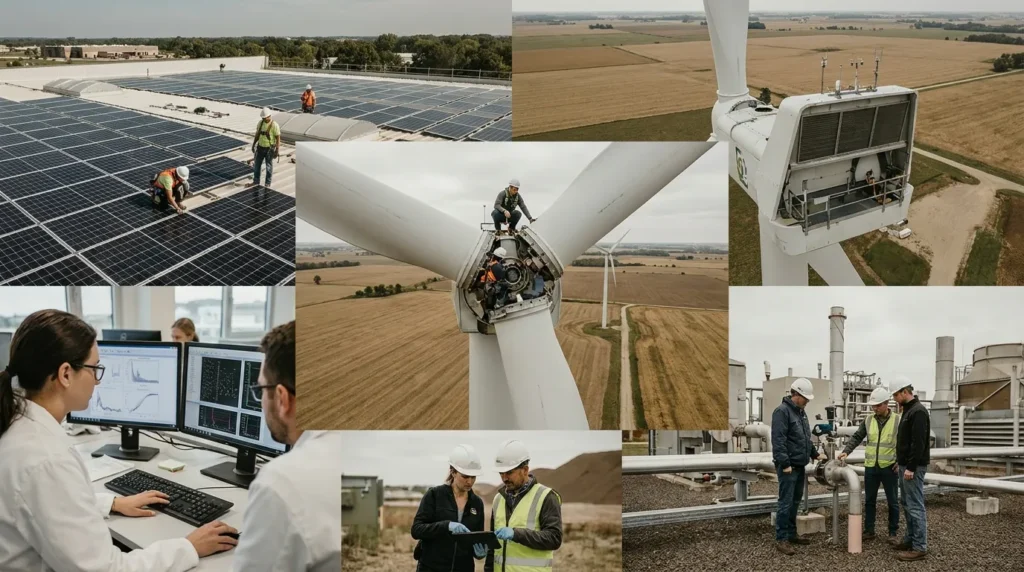

India didn’t just meet its green energy targets; it blew past them. By the middle of 2026, the country officially crossed the 520GW non-fossil fuel capacity mark, hitting its 2030 goals nearly four years ahead of schedule.
This kind of aggressive scaling doesn’t happen through government spending alone. It requires a massive, relentless influx of global capital.
If you want to understand how India attracts FDI in the clean energy sector, you have to look past the political speeches and focus on the hard regulatory plumbing that makes a pension fund in Ontario or a sovereign wealth fund in Abu Dhabi feel safe putting billions into a solar park in the Thar Desert.
Regulatory Freedom and the Automatic Route attracting FDI in Clean Energy Sector
The first reason the money keeps flowing is surprisingly simple: India got out of the way. The 100% automatic route for foreign direct investment in the renewable energy sector is the backbone of this growth.
Most sectors require tedious government approvals that can stall a project for years, but in renewables, foreign entities can invest without prior permission from the Reserve Bank or the central government.
By early 2026, the updated FDI manual further streamlined “beneficial ownership” checks, effectively shortening the due diligence period for investors from friendly nations. This level of predictability is rare in emerging markets. When an investor knows they won’t be trapped in a bureaucratic cycle for eighteen months, the risk premium drops.
Manufacturing Incentives Boosting the Clean Energy Sector
It’s no longer just about generating power; it’s about who builds the gear. The Production Linked Incentive (PLI) schemes have fundamentally changed the math for foreign companies. Instead of India just being a buyer of Chinese solar modules, the 2026 manufacturing landscape is now defined by domestic production.
With over ₹24,000 crore in incentives distributed for high-efficiency solar modules and advanced chemistry cell batteries, global giants have stopped exporting to India and started building factories within its borders.
This shift has turned the clean energy sector into a manufacturing powerhouse. FDI isn’t just chasing “quick-exit” power purchase agreements anymore; it’s being sunk into heavy machinery, factories, and long-term infrastructure.
Hydrogen and Storage as the New Magnets for FDI
Then there is the “Green Hydrogen” play. The National Green Hydrogen Mission, backed by a massive $2.4 billion outlay, has effectively de-risked the most expensive part of the transition.
By 2026, the SIGHT (Strategic Interventions for Green Hydrogen Transition) program began offering direct financial incentives for electrolyzer manufacturing. This has created a vacuum that sucks in foreign venture capital.
When the government agrees to shoulder a portion of the initial cost through Viability Gap Funding (VGF) for battery storage and offshore wind, it makes the project “bankable” for foreign lenders. Investors aren’t gambling on future tech; they are investing in a subsidized, government-backed certainty.
The numbers speak for themselves. By the first quarter of 2026, the Clean energy sector accounted for nearly 9% of India’s total FDI inflows, a record high.
The $1.5 trillion investment gap required to reach net zero by 2070 is still gigantic, but the current momentum suggests the capital is there.
India has managed to turn a climate necessity into a lucrative, low-risk asset class for the rest of the world. The transition is no longer just a moral goal- it’s a massive, profitable business.