

The scale of the recent World Economic Forum moved the global investment spotlight from unified national pitches to aggressive, state-level showdowns.
Today we will find out how Maharashtra secured $360 billion in MoUs at Davos 2026, and critically examine what comes next as these huge paper promises face the harsh translation into ground reality.
Led by Chief Minister Devendra Fadnavis, the local delegation bypassed standard promotional networking to lock down hard capital commitments.
We provide an objective breakdown of the targeted frontier sectors, the mathematical probability of projected employment numbers, and the immediate infrastructural hurdles threatening actual execution.
Rather than accepting political rhetoric at face value, the focus remains squarely on whether regional administrative frameworks can handle the unprecedented influx of foreign direct investment.
The Record MoUs for Maharashtra at Davos 2026
Breaking down the core financial data reveals a staggering ₹30 lakh crore capitalization figure. A major 83 percent of these investment proposals are driven by Foreign Direct Investment sourced from eighteen different countries.
The capital is not flowing into traditional manufacturing, but rather into specialized frontier sectors.
The administration secured binding agreements for Artificial intelligence data centers, Green energy grids, electric vehicle manufacturing ecosystems & sustainable aviation fuel production.
The specific allocation of these funds highlights a deliberate pivot toward next-generation technology. To understand the gravity of the situation in Maharashtra, one must look at the sheer density of the MoUs signed during the first forty-eight hours of Davos 2026.
Global CEOs are choosing highly specific state portfolios over broad national bets, making this localized technological concentration a significant anomaly in global capital deployment.
Tracking the Real Impact of Maharashtra MoUs AFTER Davos 2026
Measuring tangible socioeconomic deliverables requires examining the projected job creation. The state government estimates these agreements will generate three to four million new employment opportunities.
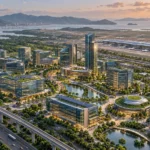
Realizing these numbers depends heavily on the successful launch of big greenfield projects, specifically the $11 billion Tata-backed Innovation City and the Raigad Pen Growth Centre.
Academic credibility demands skepticism regarding political employment projections, yet historical data provides a counterweight. Maharashtra holds a 75 percent success rate in operationalizing previous investment pacts.
If the administration maintains this execution baseline, the MoUs formalized after Davos 2026 will fundamentally alter the regional labor market.
Expanding the industrial footprint beyond Mumbai and Pune into underdeveloped corridors is the explicit socioeconomic target of these fresh agreements.
Execution Realities for Maharashtra MoUs Next
Addressing the impending execution phase demands a highly critical lens. Translating $360 billion in capital into operational industries is severely bottlenecked by local ground realities.
Aggressive land acquisition friction, chronic power grid limitations in rural industrial zones, and the absolute necessity of unbroken policy continuity stand as massive roadblocks.
Competing investment hubs like Telangana and Uttar Pradesh are simultaneously streamlining their regulatory frameworks to poach delayed projects. Securing the MoUs was merely the opening diplomatic action at Davos 2026.
If Maharashtra fails to clear its notorious administrative red tape, Global capital will simply migrate to neighboring states with faster clearance windows.
The true test of this historic economic positioning lies entirely in how fast local municipal authorities can issue permits and hand over physical land to foreign corporations.