
By mid-2026, India’s energy bet on the FDI in Green Hydrogen has moved from policy papers into the actual dirt and steel of coastal construction. The goal is simple but massive- turn India from a country that begs for oil into a country that exports the very molecules of the future.
India Positions Itself as a Global Powerhouse for Green Hydrogen Production
The National Green Hydrogen Mission is no longer a “potential” framework. As of May 2026, the government has already cleared the first major hurdles of the ₹19,744 crore outlay.
We are seeing the first 8,000 tonnes of production capacity actually go live.
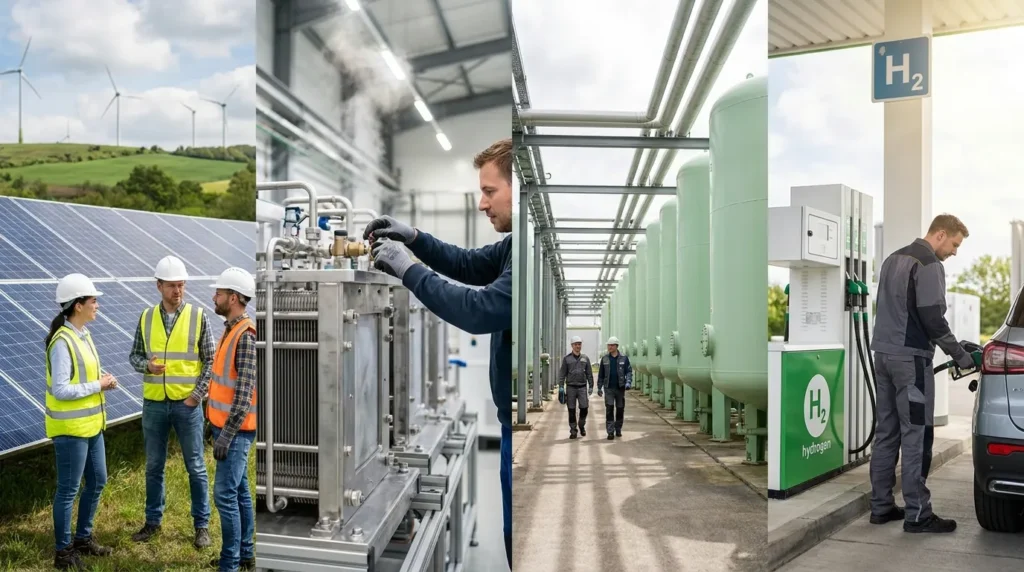
The ideal remains 5 Million metric tonnes per annum by 2030. And the 2026 data shows we are finally moving past the pilot stage. India is leveraging its massive solar capacity- which is some of the cheapest on earth- to split water molecules without the carbon guilt. If the efficiency of these early plants holds up, the “bet” starts to look less like a gamble and more like an inevitability.
Strategic FDI Inflows and the Transformation of India’s Renewable Energy Infrastructure
Capital is the real fuel here. Because India allows 100% FDI under the automatic route for non conventional energy.. the floodgates are wide open. By early 2026, the cumulative FDI in this sector has surged past $25 Billion. We aren’t just talking about local players like Adani or Reliance anymore.
Sovereign wealth funds from Singapore and massive energy conglomerates from Europe are buying into the Indian grid. Why? Because the cost of generating renewable power in Rajasthan or Tamil Nadu is now consistently lower than almost anywhere else in the G20. Global investors aren’t doing this to be “green”- they’re doing it because the margins finally make sense.
Evaluating the SIGHT Program as the Backbone of India’s Green Hydrogen Ambitions
The Strategic Interventions for Green Hydrogen Transition (SIGHT) scheme is the actual engine room of this movement. Look at the electrolyzer manufacturing tenders.
By the start of this year, 3,000 MW of manufacturing capacity was awarded to 15 different companies. This is a big deal because it stops India from trading a dependency on Middle Eastern oil for a dependency on Chinese hardware.
But it hasn’t been a faultless ride. Some of these Manufacturers are currently scrambling to hit their Q4 2026 commercial deadlines as Supply chain hiccups for rare earth metals persist. It’s a bottleneck, sure. But it’s a solvable one.
Major Coastal Hubs and the Role of India in Shaping the Global Energy Map
Geography is India’s hidden ace. The designation of Kandla, Paradip, and Tuticorin as dedicated Green Hydrogen Hubs has turned sleepy ports into high-tech export terminals.
These aren’t just shipping points; they are integrated ecosystems where the energy is produced, stored, and loaded onto ammonia carriers in one go. India is now physically positioned to undercut the shipping costs of competitors when supplying the EU and Japan.
The technology is ready, the FDI is parked in the bank, and the ports are built. Now, the market just has to decide if it’s ready to pay for the future. India has placed its chips on the table. We’ll know soon enough if the house wins.