
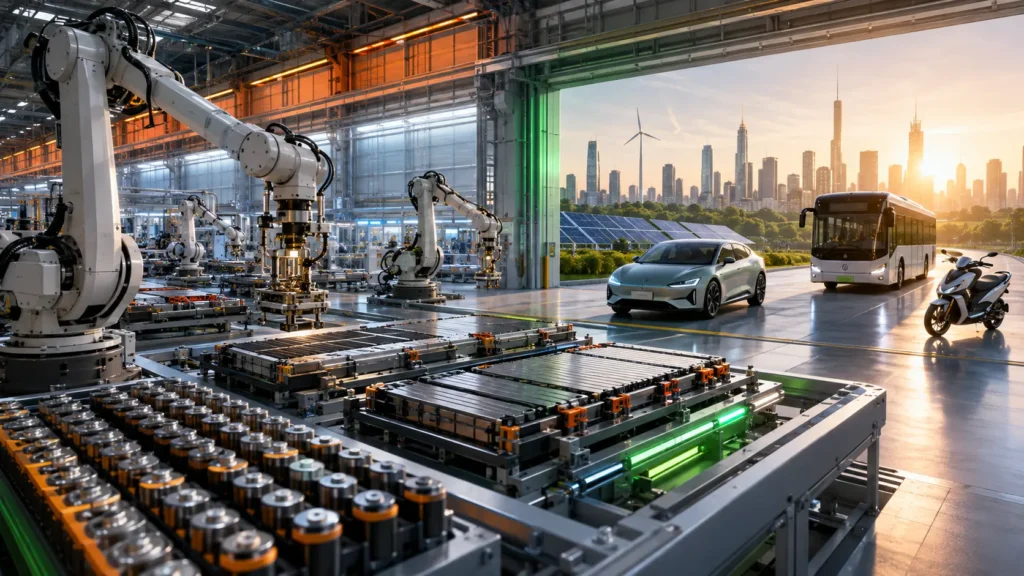

The math is simple. If the domestic market actually hits its projected 210 GWh demand by the end of this decade, importing lithium-ion cells isn’t just expensive. It’s economic suicide.
The real momentum shifting the transportation grid isn’t happening in glossy showrooms. Instead, the heavy lifting falls entirely on local gigafactories.
Analyzing the mechanics behind how the physical rollout of India’s domestic battery plants will ultimately power the broader EV revolution reveals a messy, high-stakes industrial transformation.
We aren’t just slapping imported parts together anymore. We’re finally pouring the concrete and taking control of the foundational hardware.
Evaluating India’s EV Battery Plants and Production Capacity
Government press releases love pointing to the Advanced Chemistry Cell PLI scheme as a definitive success. The actual factory floors tell a much more complicated story.
Bureaucratic friction over strict domestic value addition rules and brutal visa delays for essential foreign technical experts have severely throttled state-backed timelines.
Barely a fraction of the originally projected capacity is fully operational today. But private capital isn’t waiting around for subsidies to clear. Industrial heavyweights like Tata Agratas and Amara Raja are aggressively financing independent infrastructure across Tamil Nadu and Gujarat.
These large new battery plants are bypassing red tape entirely to meet aggressive launch deadlines. Getting these production lines running at commercial scale is the only way India avoids trading legacy foreign oil dependence for foreign cell dependence.
It is a big capital risk, yet the entire EV transition collapses without establishing this localized manufacturing base.
How Battery Plants Accelerate the India EV Market
Strip away the environmental halo, and electric mobility is strictly a hardware pricing problem. The 2026 Union Budget finally acknowledged this bottleneck by slashing customs duties on critical manufacturing machinery.
You simply can’t reach mass-market adoption when the energy storage pack makes up nearly forty percent of a vehicle’s sticker price.
Transitioning from basic assembly of imported modules to fully localizing actual LFP and NMC cell production drastically cuts those logistical overheads.
Once these newly capitalized battery plants reach optimal yield rates, the unit economics fundamentally shift. Lowering that initial purchase cost is the single lever required to accelerate adoption across India.
Without vastly cheaper domestic cells flooding the supply chain, the EV market stays trapped as a niche luxury segment instead of systematically displacing traditional combustion engines on urban roads.
Supply Chain Realities for India EV Battery Plants
Factories are useless empty shells without a consistent flow of raw materials. Upstream processing remains a glaring strategic vulnerability.
Securing direct access to lithium and graphite deposits means nothing if foreign refiners continue controlling the complex processing bottleneck.
This dangerous supply chain gap forced the recent National Critical Minerals Mission into immediate action. Manufacturers now face relentless pressure to lock down mining assets globally while simultaneously executing strict domestic recycling mandates to recover active materials from degraded packs.
Keeping these high-output battery plants fed requires building a heavily fortified closed-loop circular economy. If India fails to urgently secure this upstream refining capacity, the highly touted localized EV assembly lines will simply stall out.
Building the gigafactory walls was just the straightforward first phase. Now comes the ruthless geopolitical scramble to secure the chemistry that actually goes inside them.