
Global supply chain strategies in 2026 look nothing like they did a decade ago. Multinational corporations are done chasing rock-bottom tax rates across unpredictable emerging markets.
Institutional investors today demand regulatory readiness, robust infrastructure, and scalable production before committing capital. We need to unpack the exact regulatory, logistical, and economic mechanics keeping the BBN industrial stretch at the absolute peak of foreign capital inflows.
Looking closely at these active market drivers reveals exactly what makes this specific Himachal Pradesh region the undeniable heavyweight champion of pharmaceutical foreign direct investment in the country. It is not just historical momentum.
Baddi has fundamentally re-engineered its value proposition to keep that Pharma money flowing inward, cementing its status as the absolute safest destination for global FDI.
Brownfield Expansions Drive FDI In The Baddi (HP) Pharma Ecosystem
Foreign capital is aggressively targeting existing physical infrastructure rather than starting from dirt. Building greenfield manufacturing plants involves huge bureaucratic friction, unpredictable land acquisition costs, and years of dead time before a single pill actually rolls off the assembly line.
India’s current policy allowing up to 74 percent investment through the automatic route for brownfield projects has completely changed the investment calculus.
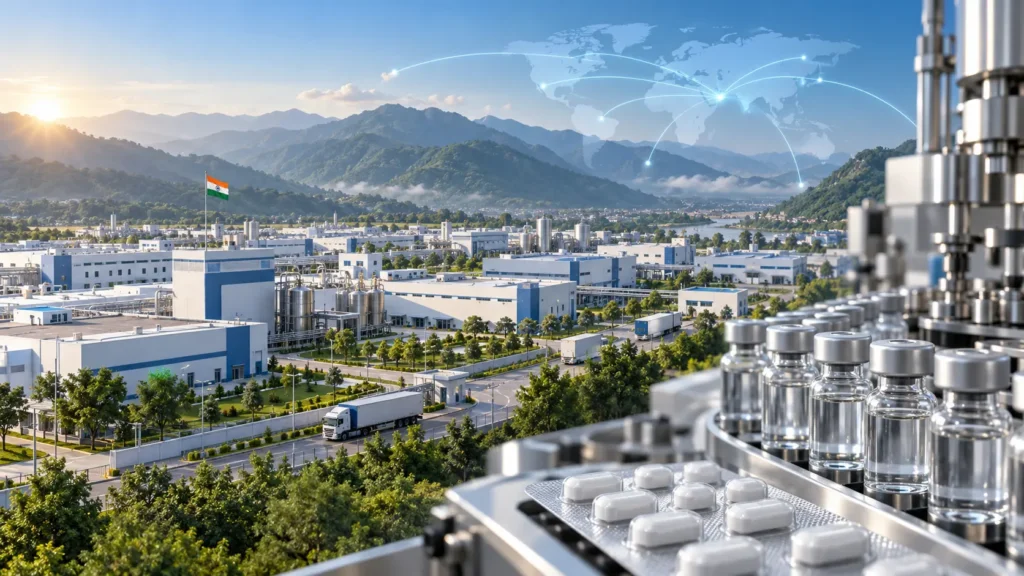
Baddi already houses over 3,000 operational manufacturing units. This staggering physical density serves as an enormous, ready-made acquisition catalog for overseas entities looking to buy out, expand, and modernize operations.
Investors gladly pour heavy FDI into these established Pharma assets because the hard groundwork is already finished. They skip the regulatory growing pains entirely, rapidly converting local facilities into globally compliant export powerhouses within mere months instead of years.
Revised Schedule M Compliance Secures Global Pharma FDI For Baddi
A big regulatory overhaul is currently forcing a historic capital requirement across the subcontinent. The government’s strict 2026 enforcement of Revised Schedule M standards demands absolute alignment with global WHO-GMP guidelines.
Upgrading older factories to these modern, AI-monitored sterile environments is painfully expensive. A single operational plant requires an immediate cash injection of anywhere from ₹5 crore to ₹50 crore just to stay legally licensed.
Domestic manufacturers in Baddi are actively leveraging this financial pressure to secure lucrative joint ventures. Local owners possess the manufacturing licenses, the skilled workforce, and the vast domestic market footprint.
Overseas investors possess the necessary capital. This mutual necessity creates a highly efficient pipeline for global FDI to enter the Indian market.
By funding these compliance upgrades, international players secure a compliant foothold in a large Pharma hub, effectively buying their way straight into a strictly regulated production space.
Mature Supply Chains Make Baddi An Unbeatable Pharma FDI Target
Tax holidays might have sparked the initial land rush decades ago, but raw logistical density is what keeps the institutional money locked in today. Foreign investors view supply chain friction as a deal-breaking operational risk.
Baddi entirely eliminates this threat through a hyper-concentrated, intensely localized network of active pharmaceutical ingredient suppliers, specialized packaging vendors, and seasoned regulatory talent living right next door.
The Inland Container Depot located locally further streamlines the physical export process, drastically cutting down turnaround times for outbound shipping.
The industrial situation of this dense Pharma ecosystem proves to cautious investors that their deployed FDI is heavily shielded from daily logistical bottlenecks.