
Forget the sterile macroeconomic spreadsheets for a second. If you want to see what actual growth looks like on the ground right now, smell the wet concrete and metallic ozone baking in the sun at a new semiconductor fabrication plant on the outskirts of Chennai. Or a massive data center in Malaysia getting wired up by exhausted engineers at 3 AM.
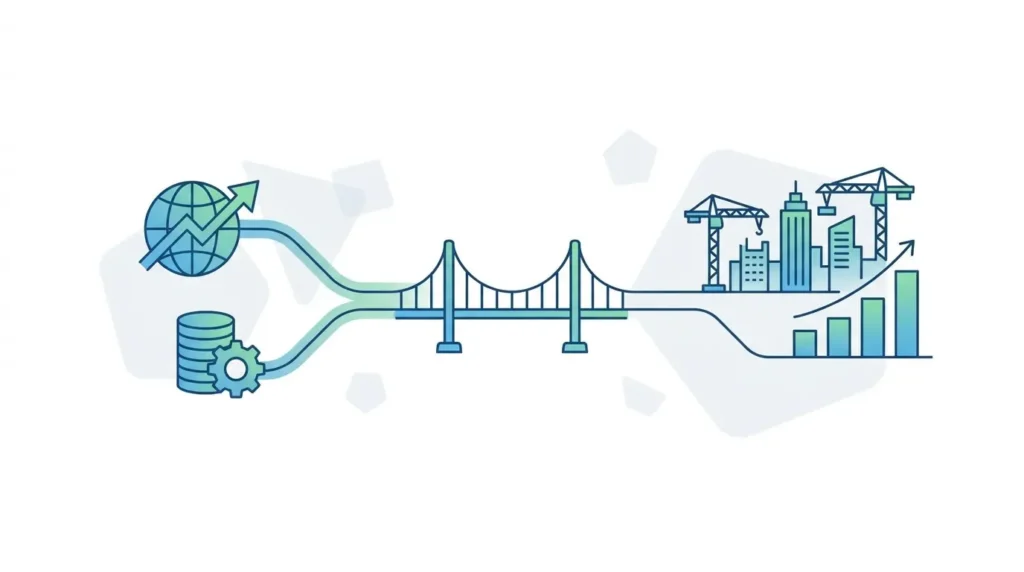
People love obsessing over central bank interest rates, but if you actually want to watch how FDI and equity capital work together to build economies, you look at who buys the land and who pays for the server racks. It is a brutal, two-part engine.
Domestic equity capital is the spark. It builds the local ecosystem. Foreign direct investment is the gasoline. An economy needs both. Period.
Equity Capital and Venture Capital Drive India’s Startup Growth
Forget textbook definitions. Equity capital is local founders bleeding ownership percentages just to survive their first thirty-six months. The landscape for that money has shifted violently.
According to 2026 Bain private equity data, the era of throwing cheap cash at terrible food delivery apps is dead. Today, domestic venture capital- which recently stabilized around $16 billion in India- is forced to fund hard infrastructure, deep tech, and green energy.
This matters because local equity creates the connective tissue of a real economy. It funds the domestic suppliers. It trains the local workforce. It eats the terrifying early-stage risk so massive foreign players do not have to build from scratch.
Global FDI Trends and the Rise of the China Plus One Strategy
Which brings us to the whales. FDI is no longer just friendly multinational money looking for cheap labor. It is a geopolitical weapon. Look at the recent UNCTAD World Investment Report. Global FDI actually plummeted by 11 percent down to roughly $1.5 trillion. Why? Because the U.S.-China fragmentation completely panicked the global supply chain. Capital is terrified.
We are seeing massive rerouting into ASEAN markets, which recently broke a staggering $226 billion in FDI inflows because companies are desperate for a viable China-Plus-One strategy.
Multinationals are buying strategic security. They bring terrifying scale and massive technology transfers that a domestic startup could literally never achieve alone.
How Equity Capital and FDI Work Together to Drive Economic Growth
This is where the money actually matters. Local equity builds a viable domestic company. A foreign multinational sees this operational asset and drops a massive FDI bomb to either buy it outright or build a gigantic facility right next door to hijack its supply lines.
Think of a local AI-logistics startup funded by domestic venture capital getting swallowed whole by a European automotive giant trying to optimize its new Southeast Asian assembly plants. That is the engine firing.
When the balance is off, things get ugly. FDI without local equity is just corporate colonialism. Foreigners digging up resources and leaving behind a hollow shell. Local equity without FDI is a permanent growth ceiling. They only work when they violently crash into each other.
Why FDI Is Critical for AI, Green Energy, and Economic Growth
The global economy is rapidly splintering into highly protected, closed-off tech ecosystems. Countries that fail to master this exact financial intersection are permanently locked out of the 2026 AI and green energy transition.
If you cannot attract the foreign whales to feed your local sharks, your economy starves. You either build the infrastructure, or you watch the money fly somewhere else.