
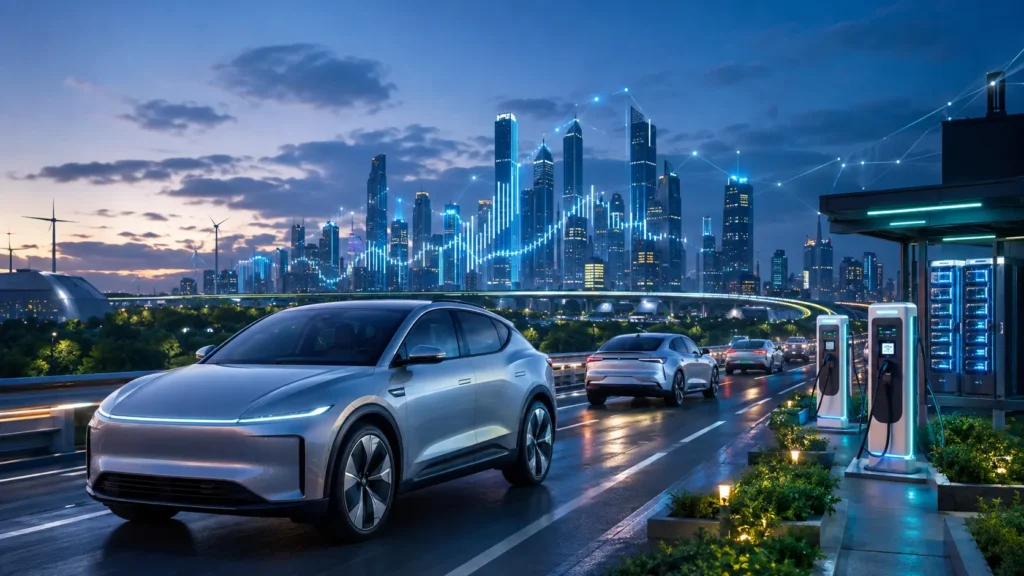

We are staring down the barrel of a reality where nearly a third of all new passenger vehicles rolling off assembly lines this year are entirely battery-powered.
Figuring out the money behind the fact that 30% of cars will be electric in 2026 and exactly who is funding this big change isn’t just an academic exercise anymore. It is a raw, high-stakes financial bloodbath. Boom.
Hitting the Thirty Percent Mark for Electric Cars in 2026
Nobody actually thought we’d hit this number so fast, but here we are in 2026 staring at a market that completely ignores the old rules of Detroit or Stuttgart. Chinese giants like BYD aren’t just participating.. they are absolutely gutting the competition.
Legacy automakers are bleeding cash out of every pore just to keep the factory lights on while trying to figure out how electric cars actually fit into their outdated production models.
And the capital required to catch up is staggering. Investing blindly into legacy brands hoping they magically pivot is a terrible idea. Real investment requires looking past the glossy showroom floors and seeing the raw panic in corporate boardrooms.
The Unglamorous Side of Investment Right Now
Forget the sexy car reveals with the smoke machines and the tech CEOs wearing black turtlenecks. The actual money in 2026 is pouring into the dirt.
Literally. We are talking about muddy, multi-billion dollar supply chains and the unglamorous chemistry of Lithium Iron Phosphate batteries.
Pouring investment capital into mining operations and battery recycling plants is like betting on the company that makes the flour rather than the bakery selling the cake.
If you want a piece of the electric cars pie, you have to realize that the smartest people investing right now are hoarding raw materials, not shiny hood ornaments. It’s a dirty, boring, incredibly lucrative game.
Who Is Investing in Electric Cars in 2026
If you want to know who is actually writing the Checks for Electric cars in 2026, look past the glossy showrooms. It isn’t a handful of idealistic tech bros trying to save the planet. It’s ruthless, cold-blooded institutional giants and sovereign wealth funds trying to monopolize the absolute most boring parts of the supply chain.
Just this year, BMW i Ventures threw down a massive $300 million fund. But they aren’t funding new vehicle designs. They are aggressively backing the AI and software that manages the dirty, chaotic factory floors where these machines are actually bolted together.
The cars themselves are practically an afterthought for the heavy hitters.
Goldman Sachs and the BNP Climate Fund just dumped massive capital into Ola Electric, purely to secure a chokehold on mass-market Asian manufacturing.
Then you have the battery bloodbath. Group14 Technologies recently swallowed over $1.2 billion in funding strictly for battery chemistry, completely dwarfing the capital raised by actual car brands.
Massive private equity titans like Carlyle are quietly slipping hundreds of millions into the EV arms of legacy industrial players like TVS Motors. Even BYD is currently trying to force a billion-dollar manufacturing expansion past angry government regulators in India.
Investing heavily into the actual software that makes these vehicles move is the other gold rush, with companies like Wayve scooping up $1.3 billion just for AI driving code.
Retail stock traders are still arguing on Reddit in their sweatpants about whether a specific model looks cool. A terrible investment strategy. The serious money already realized that the smartest play is owning the copper, the lithium, and the code.