
Picture a small-scale brass manufacturer in Moradabad. He is squinting at a cracked smartphone screen, trying to decipher foreign direct investment guidelines on a federal portal. It is all in dense, bureaucratic English. Pure frustration.
For decades, if you wanted to scale a Business in India, you needed to speak the language of the elite. That gatekeeping finally hit a wall. In June 2026, the government woke up to the fact that English exclusivity is terrible for commerce.
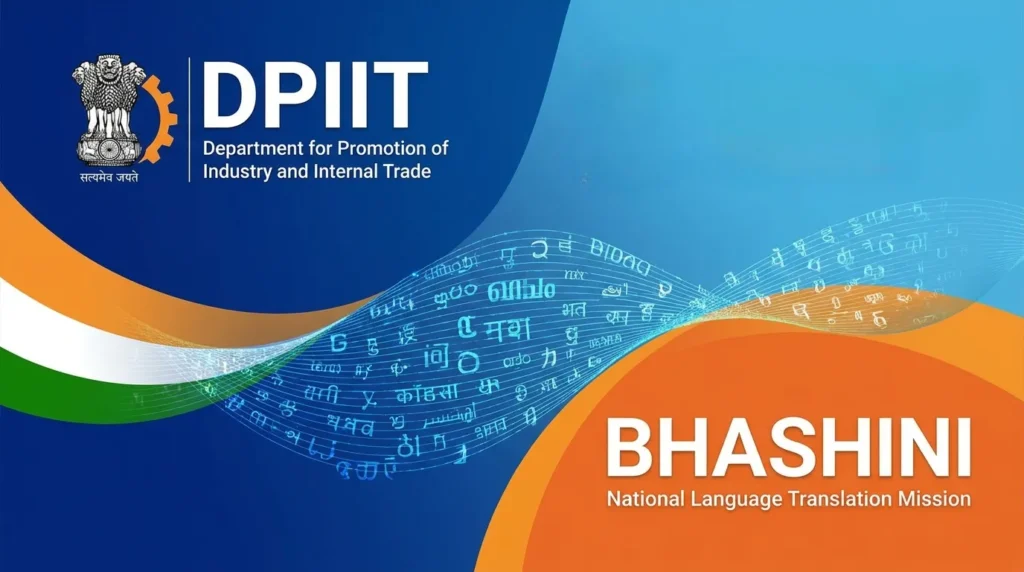
They physically integrated DPIIT and BHASHINI to tear down this outdated language barrier. Now, they are shifting how Trade happens across the country, making the entire system genuinely Multilingual. No more hiring slick Delhi consultants just to read a compliance form.
How DPIIT and BHASHINI Spark Multilingual Trade Across India
Let’s talk about the actual paperwork that changed things. On June 1, 2026, officials signed a Memorandum of Understanding under the “BHASHINI Seva/Sanchalan” program. This wasn’t the usual stack of empty government promises. It was an aggressive tech rollout. They are injecting translation APIs, domain-specific AI models, and voice-enabled tools straight into federal platforms.
The goal is to cover all 22 languages under the Eighth Schedule. Services like BHASHINI Udyat, Mitra, Appmitra, and Pravakta are literally doing the heavy lifting. Government tech usually feels like you are dialing up a modem in a 5G era. A nightmare.
But deploying an AI text-to-voice model to handle industrial policy? Legitimately impressive. This integration of DPIIT and BHASHINI fundamentally rewires how people operate. It proves that scaling Trade in a country as massive as India requires a fully Multilingual digital infrastructure.
Destroying The English Language Monopoly In Grassroots Trade
The real magic happens at ground level. This shift directly targets the people who actually build things- MSMEs, local startup founders, and foreign investors trying to navigate regional markets.
For years, the system heavily favored those fluent in English. If you had a brilliant intellectual property claim but only spoke Marathi or Bengali, you were out of luck. Not anymore.
Imagine a rural entrepreneur out in Maharashtra. She uses voice-first AI to ask a government portal a wildly complicated legal question in pure Marathi, and the system fires back a perfectly translated, instant answer. No clunky dropdown menus. No corporate jargon.
This is what happens when DPIIT and BHASHINI step in. They are forcibly stripping the English monopoly from Trade in India. It is a raw, unapologetic push for Multilingual access. The old gatekeepers are gone. Just raw access.
Fixing The Broken Ecosystem Of Multilingual Commerce In India
Let’s be blunt. The old Bureaucratic system was fundamentally broken. It gatekept Wealth & innovation for decades, punishing brilliant minds simply because they didn’t speak the Queen’s English.
If someone had a revolutionary manufacturing idea but lacked the right vocabulary, the system effectively shut them out. That is completely absurd. Today, the scale of this technological fix is staggering. These AI platforms are processing millions of inferences daily, democratizing the investment space from the bottom up.
By merging DPIIT and BHASHINI, the state is finally admitting its past failures. It is dragging Trade out of the colonial era and forcing India into a modern, Multilingual reality.
Real commerce has always happened in the streets, in local dialects, and over lukewarm cups of chai. The government simply took until 2026 to catch up to the streets.