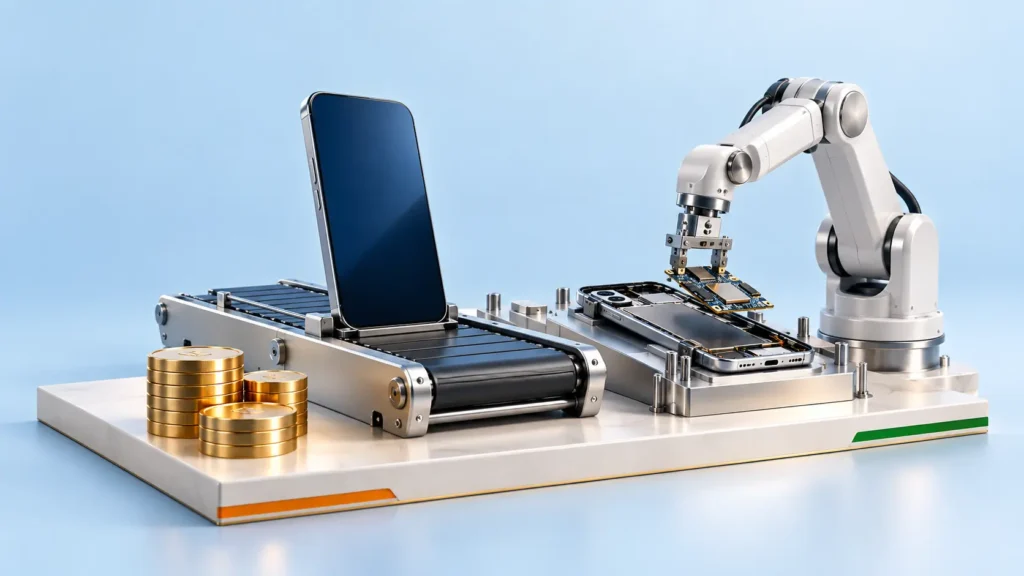

India already stamps ‘Made in India’ on 99.2% of the Smartphones it uses. We import raw parts, screw them together & call it a day.
The problem? We lack homegrown brand names. The government finally realized basic assembly line work doesn’t build empires. So they are changing the playbook entirely.
Instead of just subsidizing foreign mega-factories, they are unleashing ₹62,500 crore for a new Mobile Phone Manufacturing Scheme (MPMS) to replace the expired PLI program.
This July 2026 cabinet approval is a blatant move toward technological sovereignty. The goal is simple. Bridge the cost-disability gap against Chinese manufacturing giants and actually own the technology we sell.
Decoding the Finances of ₹62,500 Crore for New Mobile Phone Manufacturing Scheme (MPMS)
Let’s look at the raw financial mechanics of this five-year program. Running from FY 2026-27 all the way to FY 2030-31, it basically pays companies to manufacture here.
The baseline incentive structure offers between 2.25% to 5% on eligible smartphone sales. But the real kicker is the domestic sourcing bonus.
Manufacturers snag an extra 1.5% incentive if they source their key components and sub-assemblies locally. It forces the industry to move beyond just importing ready-made parts from Shenzhen and snapping them together on Indian soil.
If you want the full payout, you have to build the supply chain domestically. It is a clever trap. The government is dangling cash to force suppliers to set up local shops.
Why the Mobile Phone Manufacturing Scheme (MPMS) Targets Local Brands
This section is where the real meat of the policy lies. New Delhi wants to build the next Apple or Samsung right here. And they are willing to pay for it.
The scheme carves out an exclusive 3% additional incentive reserved strictly for Indian brands.
But there is a catch. These local companies must invest heavily in original product design, R&D, and intellectual property.
This specific financial cushion is engineered to help local startups compete on price and quality without getting crushed by foreign conglomerates.
It pushes India up the global value chain. We are moving from mere blue-collar assemblers to actual brand owners. You get paid more if the patent belongs to an Indian company.
Economic Impact and Job Creation Under the MPMS Masterplan
The macroeconomic expectations for the next five years are massive. We are looking at a ₹39 lakh crore cumulative production target.
To understand it better, smartphones officially overtook diesel and cut diamonds to become India’s single largest exported product in 2025.
Along with that immense production value, the government expects the creation of 60,000 direct jobs on the factory floors and R&D labs.
With the push for local design, we will see a surge in high-paying engineering roles. The scheme acts as a big employment engine for a young workforce.
The Long Term Vision for India Mobile Production
The previous PLI scheme proved India could convince foreign mega-factories to set up shop. But this new ₹62,500 crore initiative is the ultimate stress test.
It will determine whether the country can retain real economic value by designing, owning, and exporting its own technology.
It is a bold gamble. If it works, India stops being just the world’s assembly line and finally becomes its brain trust.